The two axes
The maturity model and DARMA are orthogonal.
The maturity model, as the market draws it, and DARMA do not compete. They are orthogonal, and they meet at a single point.
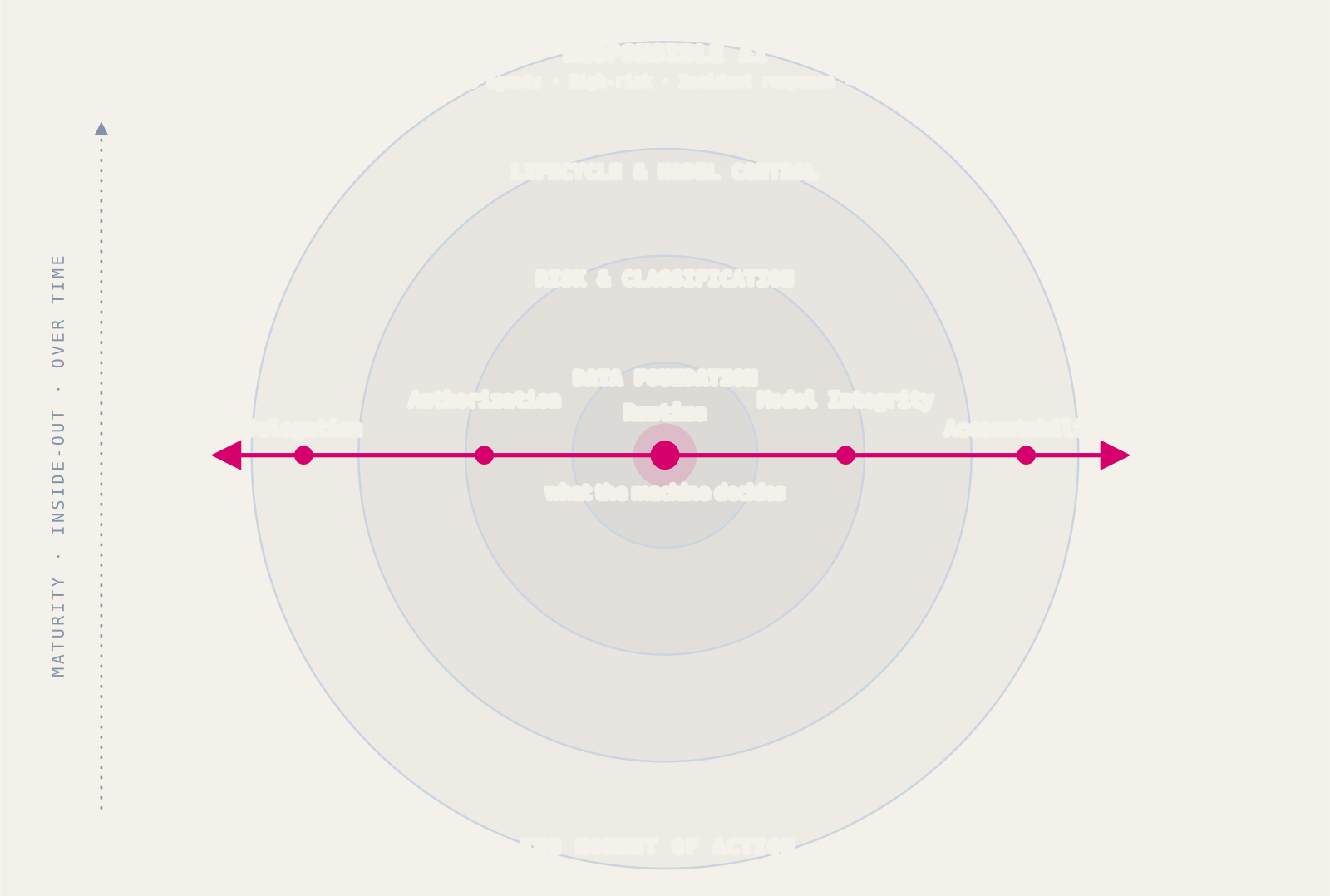
One dimension is the rings. It is the shape nearly every governance framework shares, from the NIST AI RMF to ISO/IEC 42001 to the maturity models the consultancies sell: concentric layers drawn inside-out, over time. A data foundation at the core, then risk classification, then lifecycle and model control, and at the outer edge the responsible-AI ring. Every ring describes what should happen: model cards, registries, risk tiers, permission matrices, all of them artefacts and processes.
The other dimension is the line, straight through the centre, and it is not a ring you build over months. It is five things that must be true at the same instant an agent acts:
- Delegation. Who activated the agent.
- Authorization. What it is allowed to do.
- Runtime. Whether the action passed policy.
- Model Integrity. Whether the model has moved from its baseline.
- Accountability. Whether we can prove it afterwards.
Where the rings and the line meet is the definition the ring model already carries at its core: decision rights applied to what the machine decides. The maturity model states it as a principle. The line is where that principle is either held or lost, at the moment of action.
None of the concentric rings intervene when the agent acts. The whole governance apparatus is drawn in careful detail, yet the oversight moment itself, the instant where a decision is either held or slips through, exists in no ring. That is the missing dimension, the line, and it runs straight through all of them.